Author Archive

Images from SPLASH! Beachwear 1915

Continuing the series of posts from my new book SPLASH!

From Chapter 11: “Nylon, WWII, James Bond, and the G-String.”

My grandfather, uncle, and mother on the New Jersey coast circa 1915. Men were not allowed to show any flesh beneath a line connecting the armpits.


Images from SPLASH! Women’s Swimming-Lib 1914-Style

Continuing the series of posts from my new book SPLASH!

From Chapter 10: “An Aussie Wrecking Ball Goes Rogue.”
Women’s swimming-lib, 1914-style: The suits were inspired by Annette Kellerman, and there’s not a matron in sight at the start of this open-water race in Sheepshead Bay, off the south end of Brooklyn, New York.


Images from SPLASH! Annette Kellerman

Continuing the series of posts from my new book SPLASH!

From Chapter 10: “An Aussie Wrecking Ball Goes Rogue.”
No one did more than Annette Kellerman to change the social history of swimming. In 1910, the head of Harvard’s Hemenway Gymnasium declared Kellerman the “most beautifully formed woman of modern times.”


Images from SPLASH! Olympics Swimwear 1912

Continuing the series of posts from my new book SPLASH!

From Chapter 9: “The Great Swimming Cover-Up.”
Tipping point: Great Britain’s gold-medalists in the inaugural women’s 4 x 100-meter freestyle relay at the 1912  Olympics are all dressed for the 20th century, while the stern matron behind them reminds that the past lingered on.


Images from SPLASH! Mermaids of Brighton

Continuing the series of posts from my new book SPLASH!

From Chapter 9: “The Great Swimming Cover-Up.”
In this 1829 illustration titled “Mermaids of Brighton,” formidable older women known as dippers introduce female bathers to the wonders of the sea. The bathing machines were horse-drawn.


Images from SPLASH! Gertrude Ederle

Continuing the series of posts from my new book SPLASH!

From Chapter 8: “Climb Every Mountain, Swim Every Sea.”
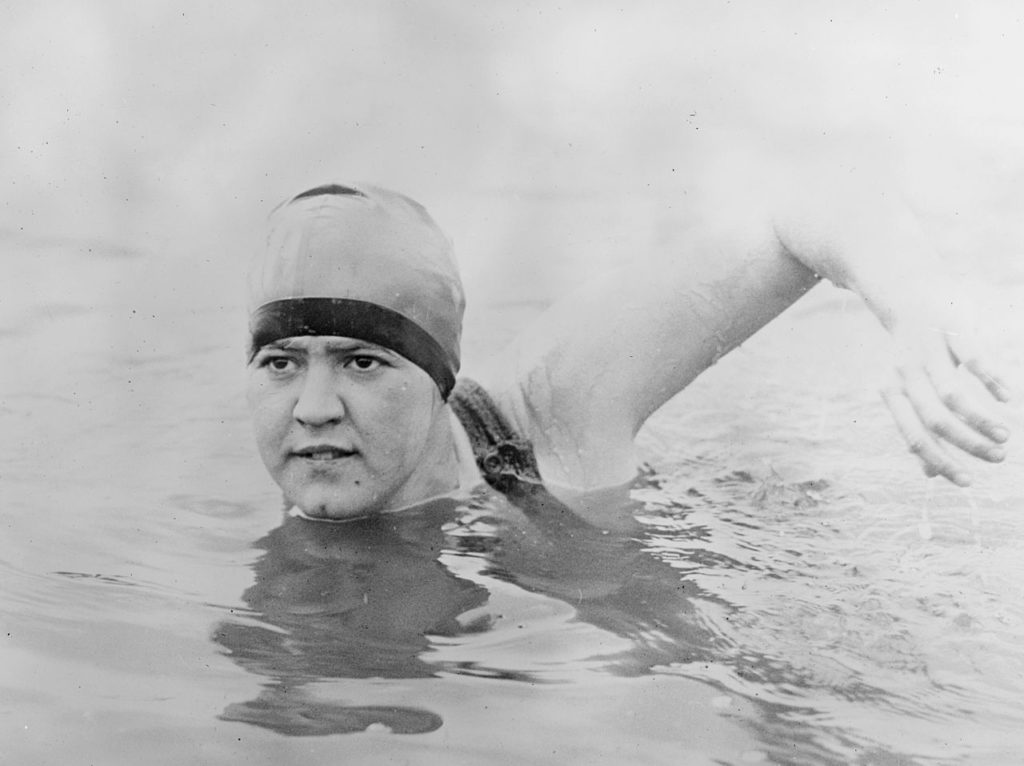
Gertrude Ederle was the first person of either sex to swim the English Channel using the crawl stroke and the first woman to ever successfully cross it. Her 1926 Channel swim shaved almost two hours off the previous record.


Images from SPLASH! Matthew Webb

Continuing the series of posts from my new book SPLASH!

From Chapter 8: “Climb Every Mountain, Swim Every Sea.”
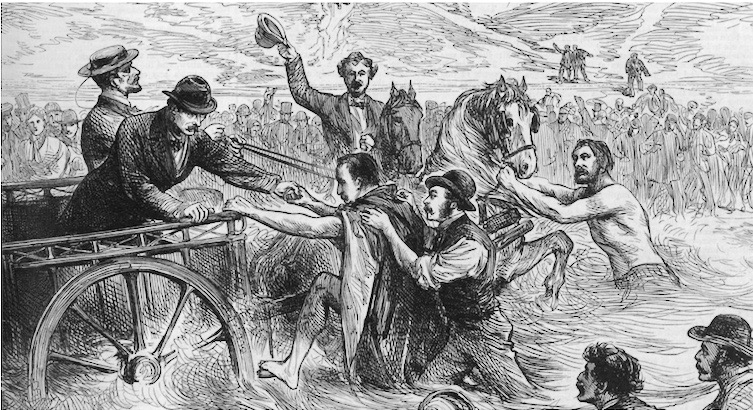
For the ancient Romans, the English Channel was the “horribilem salum,” the terrible swell. In late August 1875, Capt. Matthew Webb became the first person known to swim it. He’s shown here being helped out of the water at Calais, soon to be the most famous man in the world.


Images from SPLASH! Wrigley Ocean Marathon

William Wrigley

Continuing the series of posts from my new book SPLASH!

From Chapter 7, “Diving In for Dollars and Pounds”:

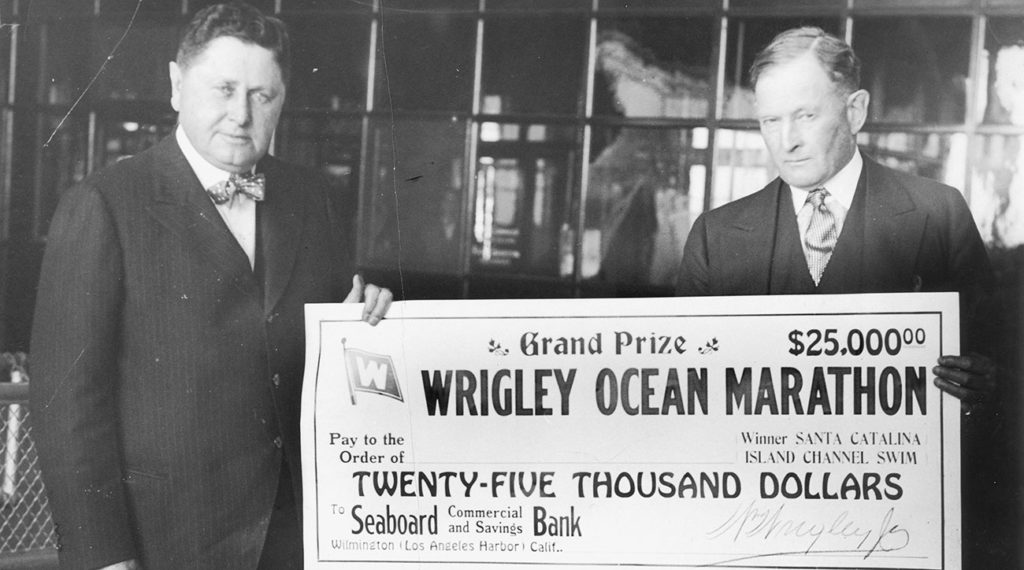
William Wrigley, Jr., at left, with a facsimile of the check that is almost certainly the largest purse in swimming history. In current dollars, winning Wrigley’s 1927 “ocean marathon” from the California mainland to Santa Catalina Island was worth about $360,000. (Credit: The Catalina Island Museum.)


Images from SPLASH! #16

Continuing the series of posts from my new book SPLASH!

From Chapter 7, “Diving In for Dollars and Pounds”:

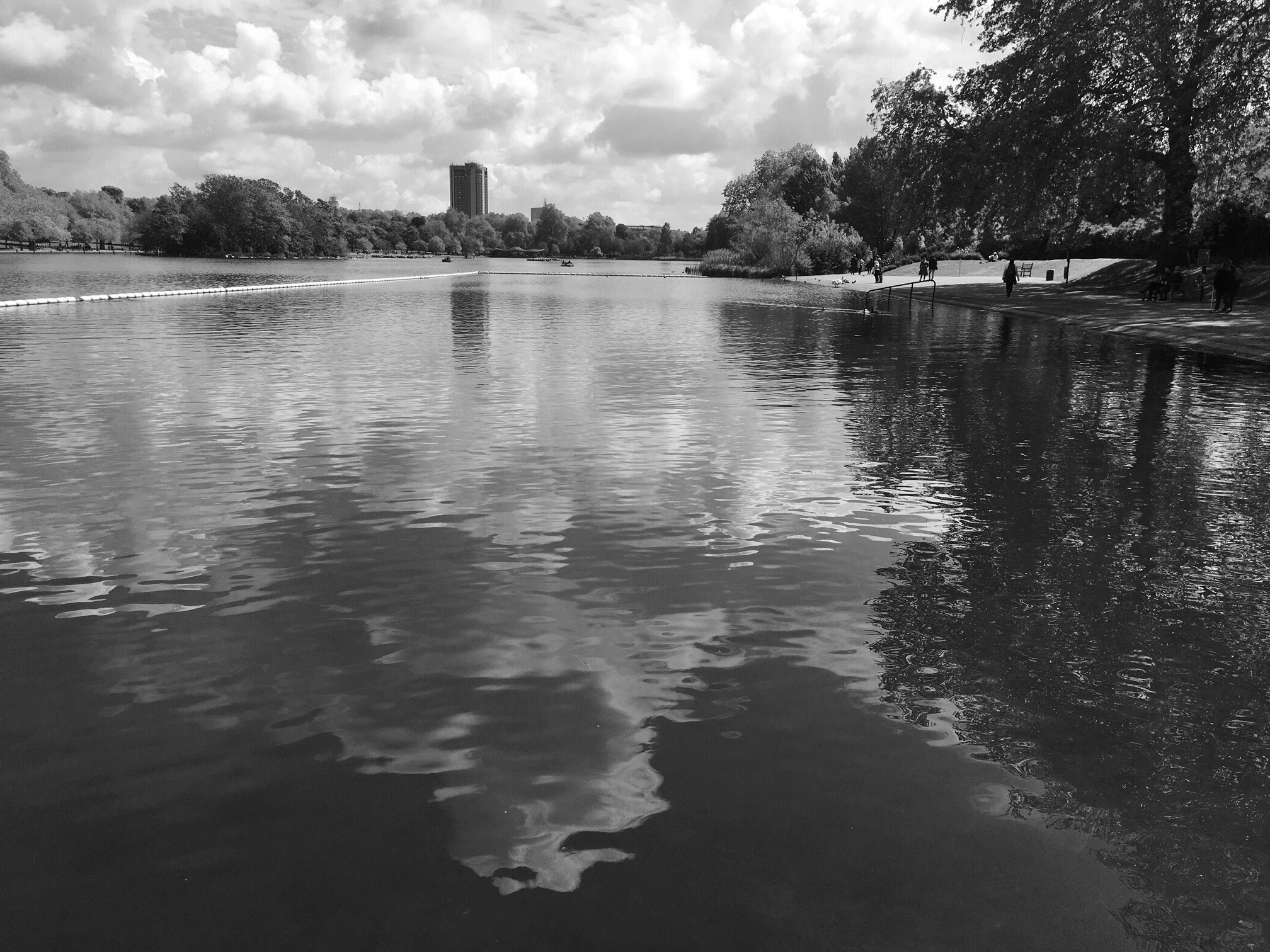
The 4,000-yard-long Serpentine in Hyde Park: venue for some of London’s earliest and most notable purse swim-races, including the first known “back-swimming” race, in 1866. One reporter wrote that it was  likely to be the last race for back-swimming as well.


Images from SPLASH! #15

Continuing the series of posts from my new book SPLASH!

From Chapter 7, “Diving In for Dollars and Pounds”:

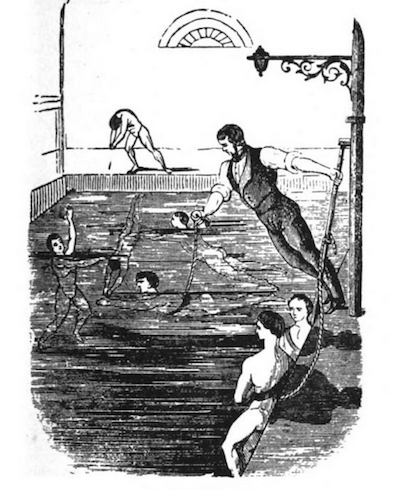
Roping students to teach swimming was common in London by the mid-19th century, but Captain Stevens — the leaning roper here — might have been singular in his claims to success. According to his advertisements, he taught 60,000 people to swim over a 16-year span.


Images from SPLASH! #14

Continuing the series of posts from my new book SPLASH!

From Chapter 6, “A Frog in Every Tub”:

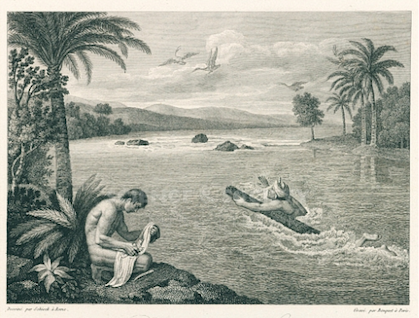
An aquatic mailman of Peru, drawn based on a description by Alexander von Humboldt after his South American travels at the dawn of the 19th century. According to Humboldt, this postman descended the River Chamaya and thence down the Amazon, with the help of a log. He carried letters in his turban to keep them dry.

(Credit: Science Museum Library / Science and Society Picture Library.)


Recent email and other responses to 67 Shots

At the time of the killings I was at UCSB grad school. An exchange student from UK remarked that this was an instance of working class vs. middle class. There was a resentment by those subject to the draft towards those with deferments.

One of the black activists on campus marveled that whites would shoot other whites.

Strange times.

— Paul Fogel

I remember my brother graduating from high school in 1971 and my dad not allowing him to attend Kent because of the shootings.

—Patrick Casseday; Chardon, OH

I was in the Kent State library reading Sartre’s Being and Nothingness, assigned to my English Freshman Honors reading list, when the shootings occurred. I was also taking drawing classes in the building next to the ROTC building (all barracks and all really miserable), but that class ended at 10:45. I heard shouting, screams and smelled tear gas. I closed the book, went back to my off-campus lodging, and then my landlord came home, flipped on the tube, and said, “They all should have been killed.” School was closed by then. Alison Krause and I knew each other as she was also in art/art history. So I went home to Akron, called my parents who were in Dallas on business trips, and they told me to meet them in San Francisco the next day. So I did.

— Geraldine Kiefer; Winchester, VA

I was a college student at Ohio University during the Kent State shootings and have memories of the National Guard and tear gas first hand!

I remember finding out many years later that when my Dad came down to campus to pick my sister and me up after the campus shut down, he had a gun in the glove compartment.   I had no idea my Dad had even had a gun, and I had no idea that there was any need to be afraid.  After reading your book, I can see that I was not alone in my feeling of not being afraid and that my Dad was not alone in his very real fear of the explosive situation.

—Sue Konkel; Oconomowoc, WI

This came from a Guardsman who had heard of 67 Shots but not yet read it. I don’t have permission to use his name:

I was one of the green pigs. I don’t know if it is in your book, but another anecdote is the class in the theater at Camp Perry a week after the shooting. A major made a statement that put a hush over the auditorium. He said if we were at Kent State after our shooting-range practice we would have killed forty instead of four. We were all so bummed out and now shocked by his statement. Thanks for writing the book. I plan to read it.

This poem was published on The New Verse News blogspot on June 11, 2016.

AFTER READING 67 SHOTS: THE SHOOTINGS AT KENT STATE

by Alan Catlin

Recalling the all night vigils

Memorial sit ins
Student strike
Church services
Peace March through an Upstate
New York city and all the hostility
for all the long hairs

Recalling the Peace Fair
no one came to
The petitions for a Moratorium
for the Vietnam War no one signed
The peace committee work
that accomplished nothing

Recalling those glorious Spring days
All that time to kill with no classes
no Finals just graduation and
a draft notice that was sure to follow

Recalling playing softball
drinking beer and hanging out
with the cleanup hitter who
couldn’t make weekend end games

“National Guard duty.” he said when asked
why he could play.  “I hope I don’t get
called up. I hope there are no more
student riots like at Kent State.”

“You wouldn’t shoot me, Doug, “
I teased. “We’re friends.”

He looked at me, then toward
the pitcher toeing the mound
and I knew he would, if someone
in command told him to.
“You’re up.” He said.

Alan Catlin has published numerous chapbooks and full-length books of poetry and prose, the latest of which, from March Street Press, is Alien Nation.

Christian Science Monitor, May 10, 2016

In his extraordinary new book 67 Shots: Kent State and the End of American Innocence, historian Howard Means pays tribute to the dead, the injured, and the witnesses by seeking the fullest version of the truth. This isn’t history writing at a distance. Means interviewed many of the players, major and minor, in this tragedy. Their personal stories give “67 Shots” a deeply human feel and turn it into one of the most heartbreaking books in memory. You can read the entire piece, including a lengthy interview, at: http://www.csmonitor.com/Books/chapter-and-verse/2016/0510/Inside-the-heartbreak-of-the-Kent-State-shootings.

Holding on at amazon.com

Amazon has lots of opportunities to scream “Bestseller!” I’ll take this one. “67 Shots” has just a completed a full week as #1 New Release in books about “War & Peace.” That sounds like a big category to me.

Coming in April 2017 from Scribner: THREE MINUTES TO DOOMSDAY, by Joe Navarro, with a little help from a friend. Movie maybe to follow!

from the April 13, 2015, VARIETY:

George Clooney and Grant Heslov’s Smokehouse Pictures has picked up the film rights to Joe Navarro’s “Three Minutes to Doomsday.”

The book follows the FBI’s leading body language expert, Navarro, who was sent to track down Rod Ramsay to report on his knowledge or association with Clyde Lee Conrad, an U.S. Army officer who sold top-secret classified information to the People’s Republic of Hungary. It documents Navarro and Ramsey’s relationship and interviews against the backdrop of the Cold War.

Scribner, a division of Simon & Schuster, recently acquired North American rights for the book.

Howards Means, who collaborated with Robert Baer on “See No Evil” and “Sleeping With the Devil,” assisted Navarro in his writing. “Syriana,” for which Clooney won an Oscar, was based on Baer’s books.

Copyright © 2026 Howard Means   •   This site powered by